A closer look at the stages behind forged-wheel design—where geometry, material and surface detail come together.
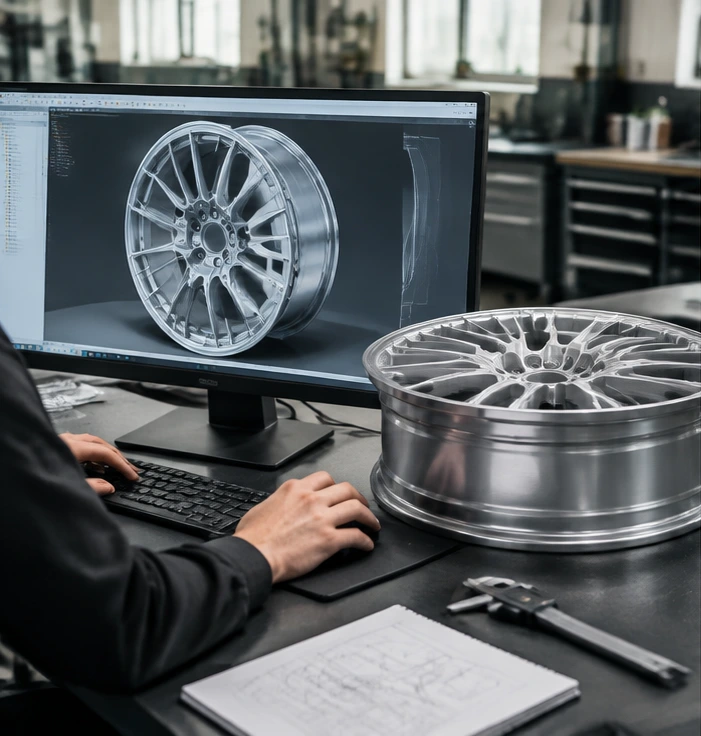
Design & geometry
Design around the vehicle
A wheel’s character starts with its proportions. Diameter, width, offset and brake clearance shape the design brief, while the spoke layout brings the visual identity into focus. The aim is a considered relationship between the wheel and the vehicle—not simply a different set of spokes.
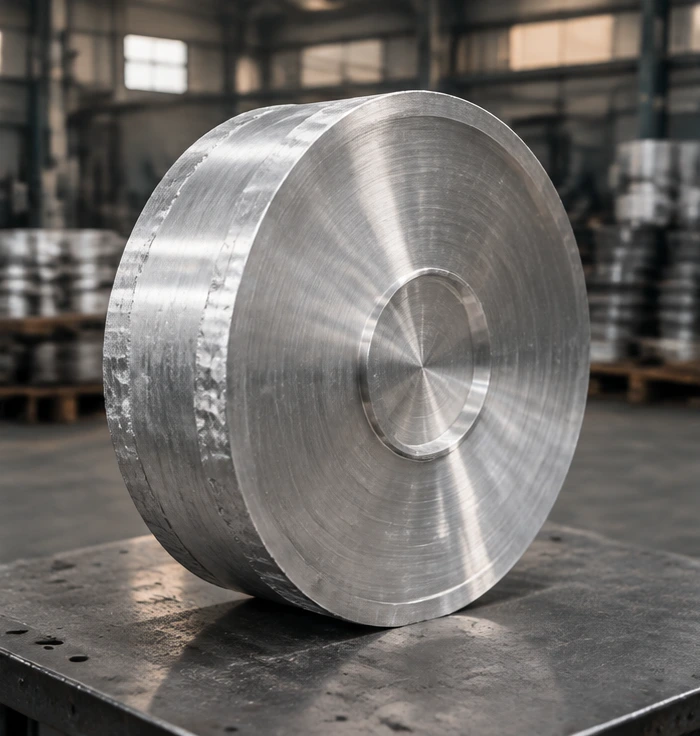
Forged material
Begin with the foundation
In forged-wheel manufacturing, an aluminium blank is shaped under pressure before its final design is machined. Material selection and the forging specification provide the starting point for everything that follows, from the barrel profile to the detail of the face.
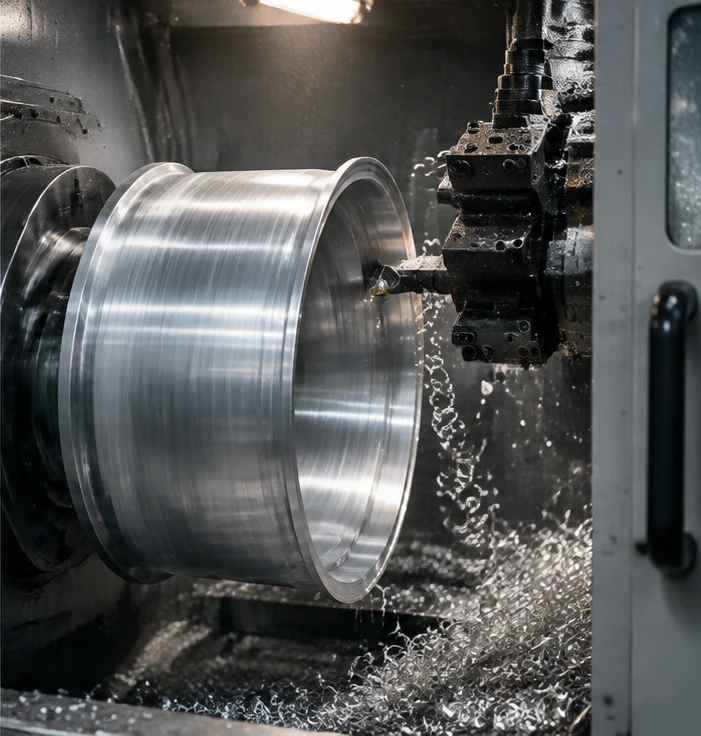
Lathe turning
Shape the profile
Turning establishes the wheel’s underlying geometry. The barrel, mounting surfaces and face profile take shape as the blank is cut to its intended dimensions. Concavity is part of this geometry, considered alongside the space needed for brakes and the chosen fitment.
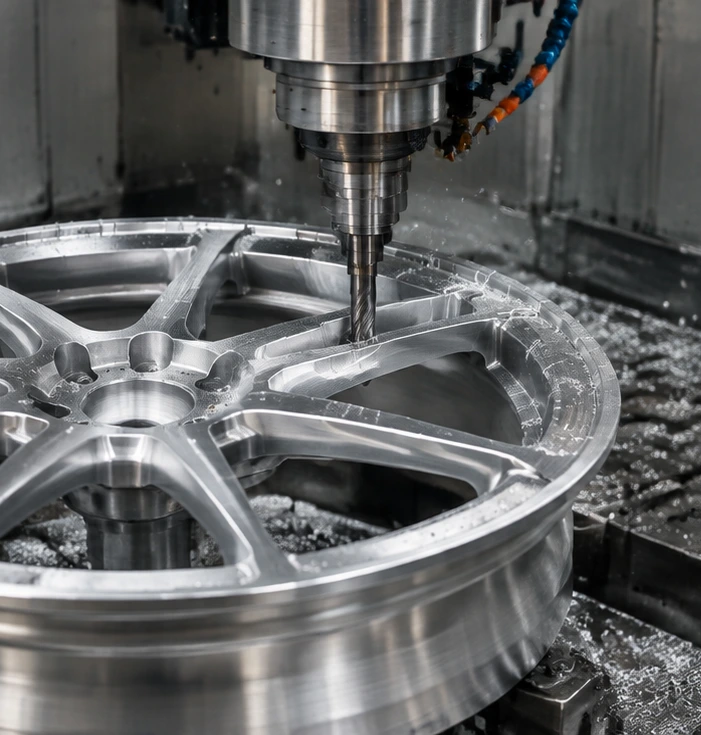
CNC machining
Reveal the design
Machining transforms a solid form into a recognisable wheel. Carefully planned tool paths define the spoke openings, pockets and transitions. Broad surfaces and fine details work together, giving the design its depth and a consistent visual rhythm.
Hand preparation
Refine every surface
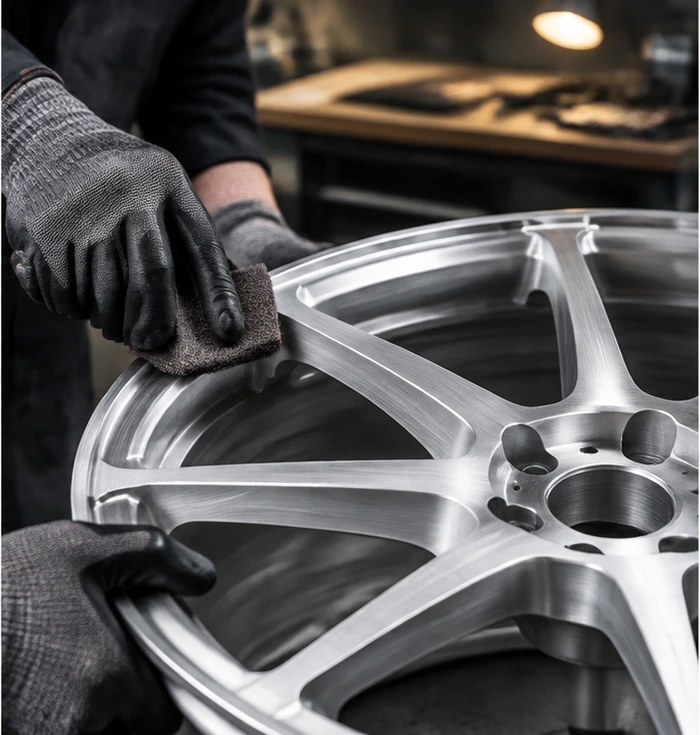
The surface deserves as much attention as the silhouette. Deburring and preparation refine the machined edges, while brushing or polishing establishes the character beneath the coating. These details influence how light moves across the finished wheel.
Colour & finishing
Make the finish personal
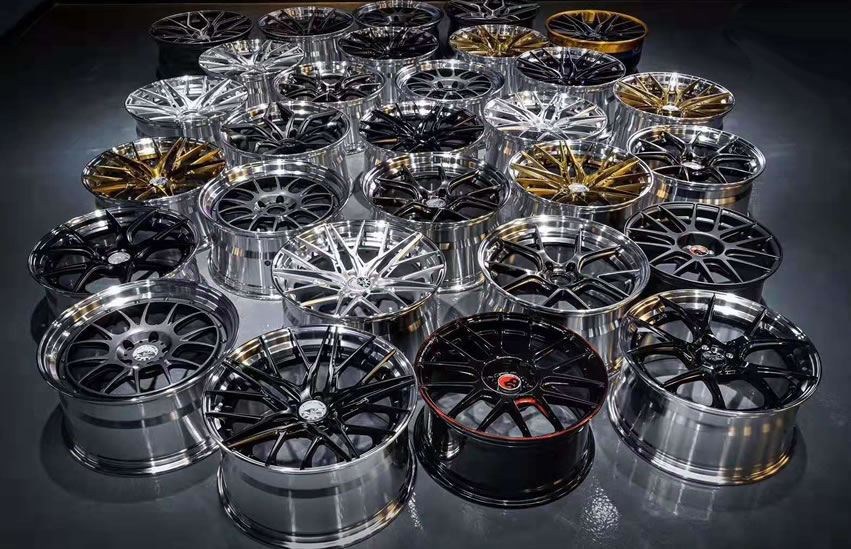
Colour is the final expression of the design. An opaque coating creates a solid appearance; a transparent finish can let the prepared metal surface remain visible. Gloss, matte and textured options bring different moods to the same form, alongside a customisable centre cap.